
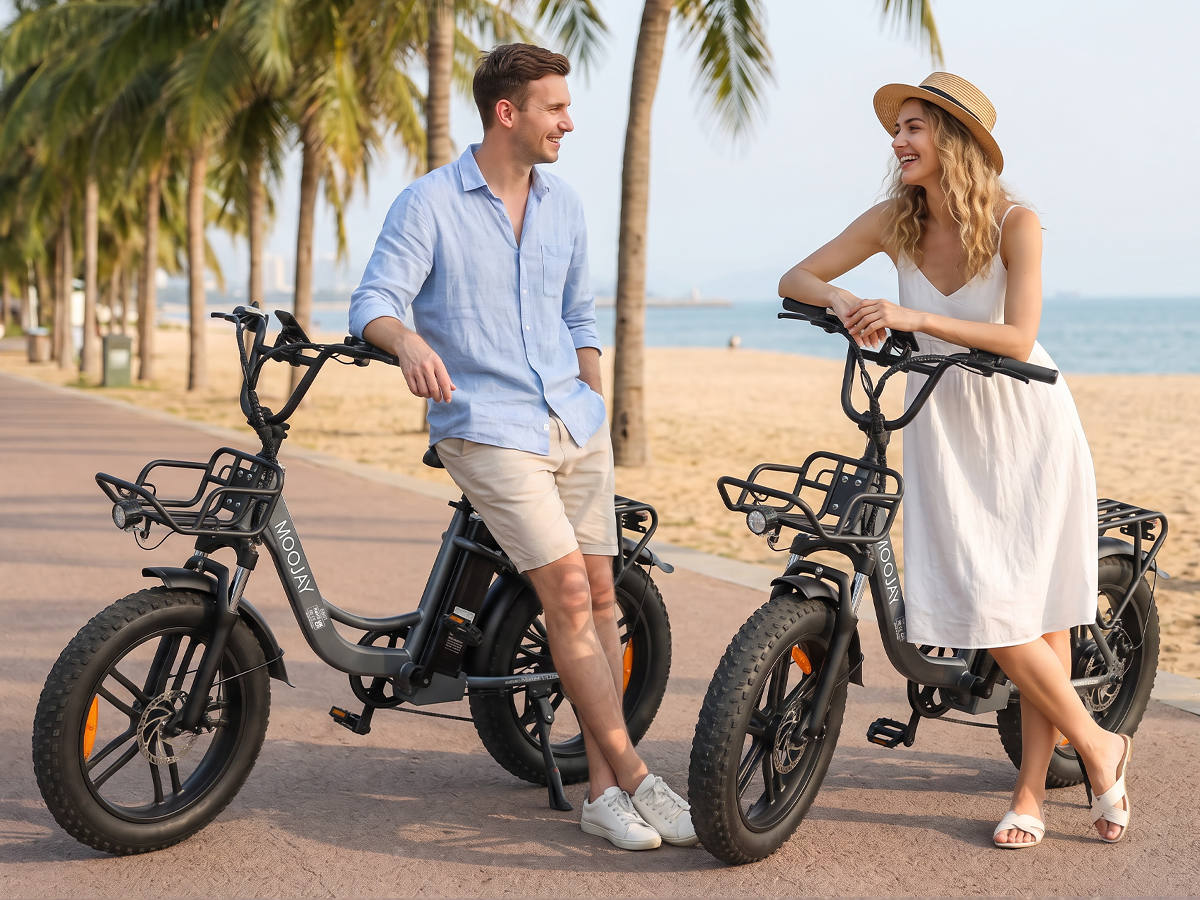
MOOJAY BUYER'S GUIDE · UPDATED AUGUST 2026
MOOJAY EB51 vs ENGWE L20 Boost: Which E-Bike Fits Everyday Life Better?
Two cargo-ready fat-tire e-bikes, considered through the moments that matter after the specifications page.
EB51 and L20 Boost share many similar headline specifications, which can make the choice less straightforward than it first appears. MOOJAY reviewed the product information publicly published by both brands to explain how the differences may affect cargo, storage, charging, comfort, and everyday riding.
THE SHORT ANSWER
The Better Bike Is the One That Makes Your Week Easier
A longer range claim can look decisive on a comparison chart. In daily life, the harder questions usually arrive elsewhere: whether the bike is manageable through a narrow entrance, whether groceries can be divided without overloading the steering, and whether the battery can reach a convenient outlet when the bike cannot.
On paper, the EB51 and L20 Boost have a remarkably similar foundation. In daily use, their priorities separate. The EB51 makes the stronger case for riders who want organized front-and-rear cargo space, lower overall weight, and an additional layer of seated comfort. The L20 Boost is the more compelling option for riders who place torque-responsive assistance and the longest manufacturer-claimed range first.
SIDE-BY-SIDE OVERVIEW
Key Specifications
| Feature | MOOJAY EB51 | ENGWE L20 Boost |
|---|---|---|
| Rated motor | 250W | 250W |
| Assistance limit | 25 km/h | 25 km/h |
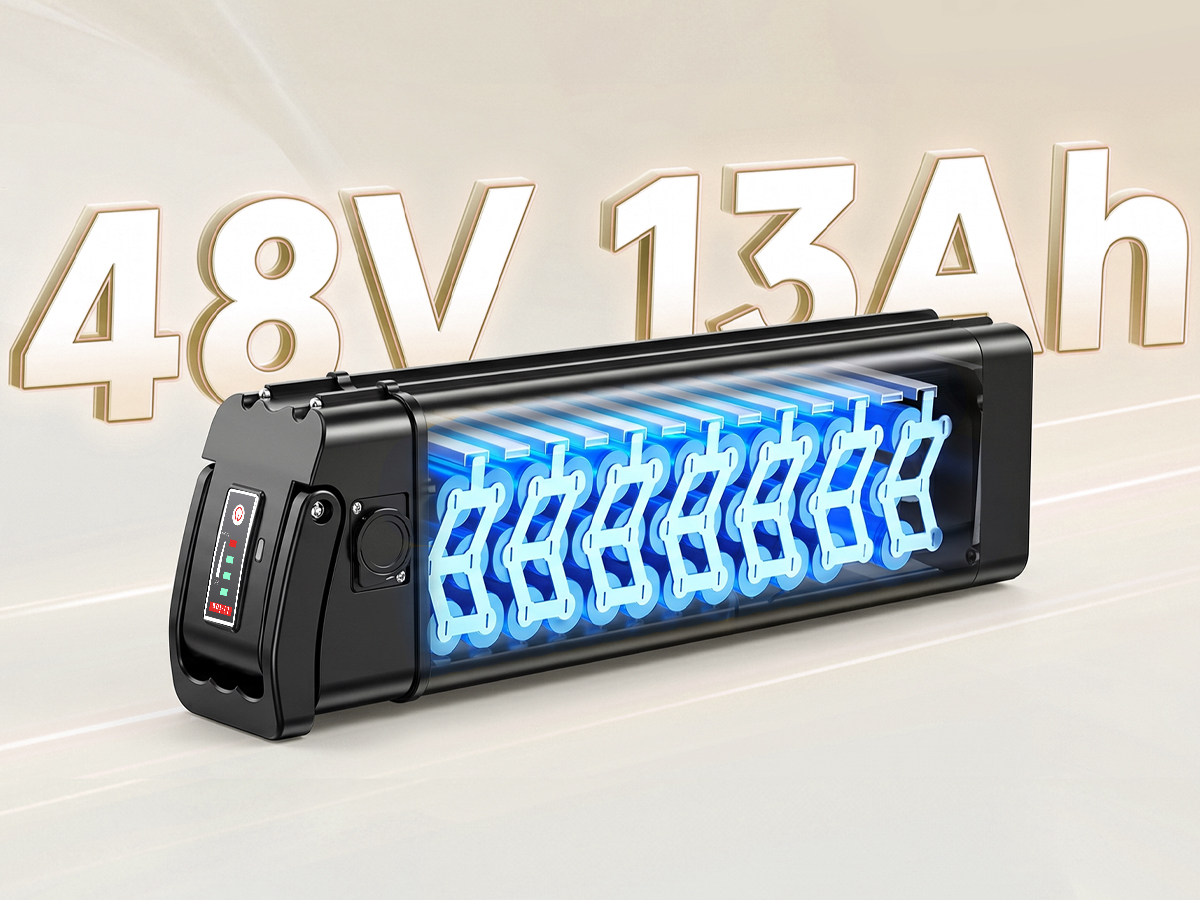
| Battery | 48V 13Ah, 624Wh | 48V 13Ah |
| Claimed PAS range | Up to 80 km | Up to 126 km |
| Listed torque | ≥55 N·m | 75 N·m |
| Bike weight | 30.2 kg | 34 kg |
| Maximum rider/payload rating | 125 kg rider limit | 120 kg payload rating |
| Front basket | Up to 25 kg | Up to 10 kg |
| Rear rack | Up to 25 kg | Up to 25 kg |
| Suspension | Front fork + seat suspension | 50 mm front fork |
| Brakes | Front and rear mechanical discs | Front and rear 160 mm mechanical discs |
| Tires | 20 × 4.0-inch fat tires | 20 × 4.0-inch fat tires |
| Charging time | Approx. 6.5 hours | Approx. 6.5 hours |
| Drivetrain | 7-speed | Shimano 7-speed |
The figures above are manufacturer-listed specifications, not results from a shared independent test. Product configurations can vary by country and production batch. Confirm the exact configuration before purchase.
THE BUYING DECISION
Four Questions Worth Answering Before You Choose
Before comparing one more number, picture where the bike will sleep, what you will put on it, and when you will realistically charge it.
Will it fit where I actually keep it?
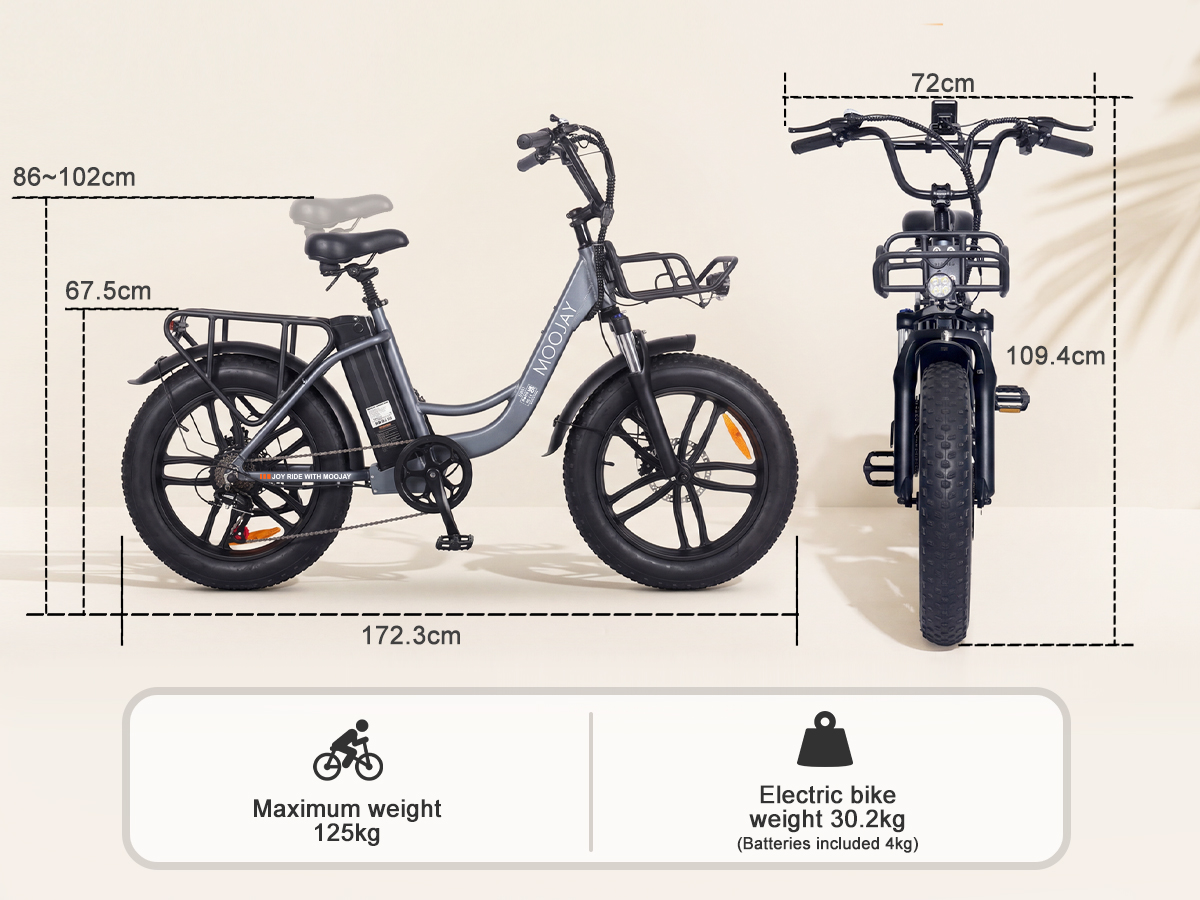
Measure the doorway and parking space—not just the room itself. EB51 is a full-size, non-folding bike measuring about 172.3 × 72 × 109.4 cm. Its lower 30.2 kg listed weight can help when you are holding a gate or straightening the bike in a narrow space, but it is still too heavy for most people to carry upstairs comfortably. If stairs are part of every ride, neither model is an ideal match.
What do I really carry on a normal trip?
A handbag and a full grocery run create very different needs. EB51's 25 kg front-basket rating gives you more room to divide a load, but that does not mean the basket should always be filled to its limit. Put lighter, bulky items at the front and keep denser items low and secure at the rear; a heavily loaded front basket changes steering feel and requires slower turns.
Will the battery fit my week—not just one ride?
Start with your round-trip distance and where the bike can be charged. If your commute stays comfortably within EB51's stated range, convenient charging may matter more than the largest range claim. EB51 can be charged on the bike, or its removable battery—about 4 kg—can be taken indoors. That is useful when the bike stays in a garage, shared storage room, or another place without a nearby outlet.
Do I want the motor to react to my legs?
A torque sensor changes assistance according to how firmly you pedal, which can feel more natural when starting or climbing. That is a genuine L20 Boost advantage. It is not automatically the deciding feature for everyone: if most of your riding is steady urban travel and your bigger concern is carrying groceries, charging indoors, or managing the bike at walking speed, EB51's practical layout may matter more often.
01 / CARGO & DAILY UTILITY
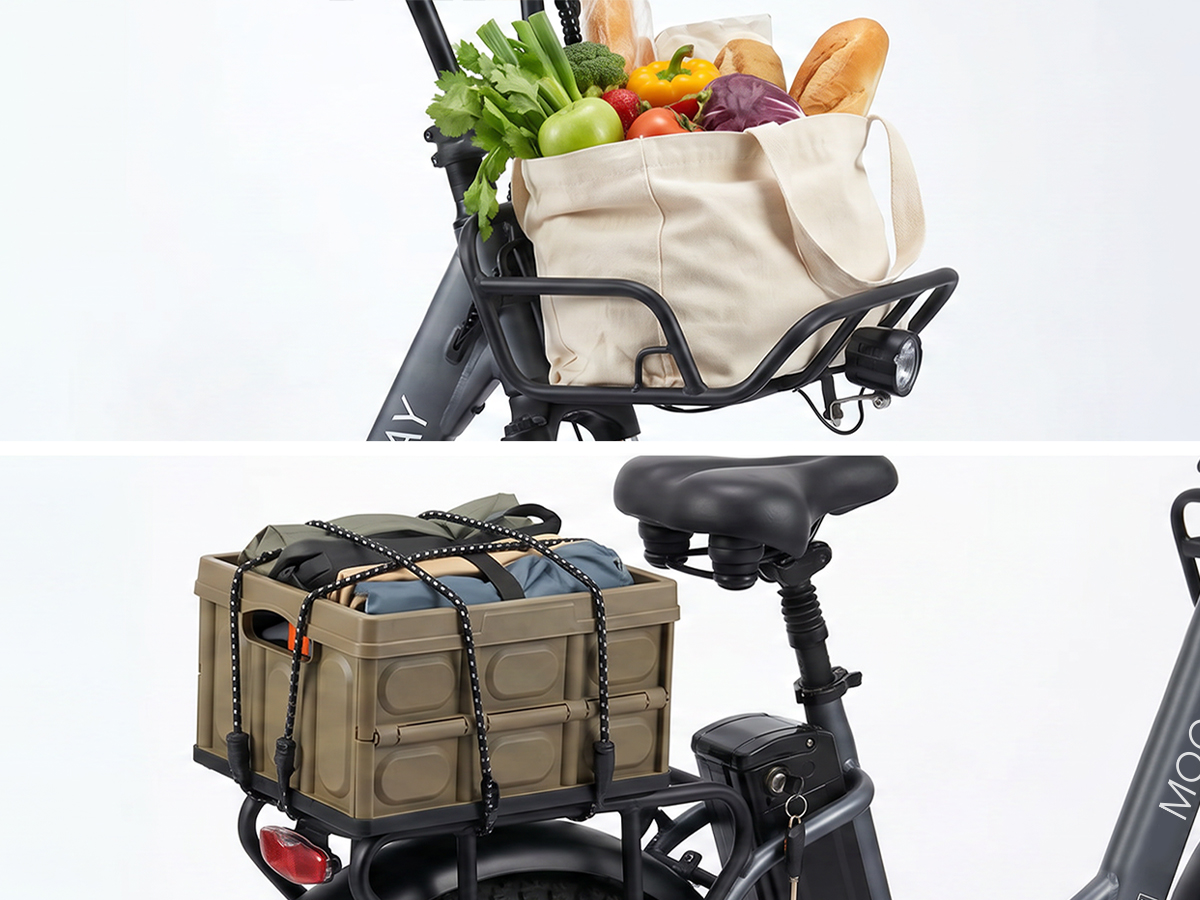
Will the Front Basket Carry What You Actually Buy?
A front basket matters most at the unremarkable end of a ride: a grocery stop, a work bag that should remain within sight, or a few daily essentials that are easier to reach than they would be on a rear rack.
Both bikes provide front-and-rear carrying space, but the published ratings tell a different story. The EB51 lists up to 25 kg for each cargo area, while the L20 Boost lists 10 kg at the front and 25 kg at the rear. For riders who genuinely use both ends of the bike, the EB51 offers more flexibility in how a load is organized instead of directing most heavier items to the back.
Cargo must be secured and balanced. Basket and rack ratings do not increase the bike's stated rider or payload limit, and racks should never carry a passenger unless the manufacturer specifically approves that use.
02 / WEIGHT & RIDER FIT
Can You Manage the Bike When the Motor Is Off?
Motor assistance can make a heavy e-bike feel composed once it is moving. It does not help when holding a gate, repositioning the bike in a garage, walking through a narrow entrance, or settling it into a crowded storage area. In those moments, the EB51's listed 30.2 kg weight—3.8 kg below the L20 Boost—can become more relevant than the number initially suggests.
Fit remains personal. The EB51 is intended for riders approximately 155 cm and taller and lists a 125 kg maximum rider weight. ENGWE recommends the L20 Boost for riders roughly 152–183 cm and lists a 120 kg payload capacity. Height is only a starting point: comfortable reach, inseam, balance at a stop, and confidence while walking the bike matter just as much.
03 / MOTOR & CONTROL
How Do You Want the Motor to Respond at a Start?
Both bikes carry the same 250W headline, yet they need not feel identical from the pedals. ENGWE pairs its published 75 N·m figure with a torque sensor and temporary Boost function, giving the L20 Boost the clearer advantage for riders who want assistance to respond closely to pedaling effort—particularly during starts and changing gradients.
The EB51 lists ≥55 N·m and a 7-speed drivetrain. Its appeal is not a contest for the highest torque figure. It is a calmer balance of everyday assistance, practical cargo hardware, and lower bike weight for riders whose routes are defined as much by stops and errands as by open distance.
04 / COMFORT & CONTROL
Which Comfort Details Will You Feel Every Day?
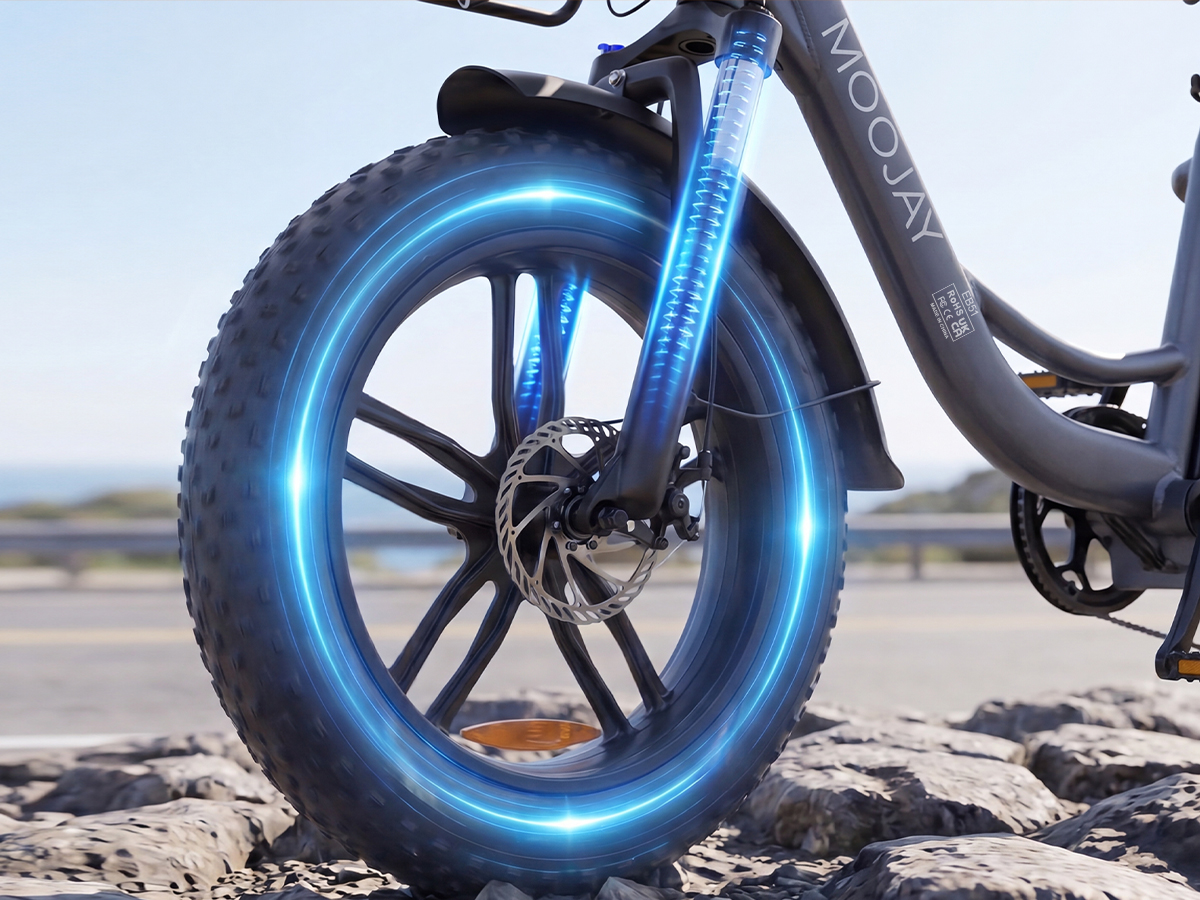
Wide tires and front suspension help both bikes settle ordinary changes in surface. EB51 adds suspension at the seat, a detail that may matter more over repeated seams, patched streets, and firm recreational paths than it does in a showroom.
Both bikes rely on front and rear mechanical disc brakes. They are familiar and serviceable, but their consistency still depends on adjustment, pad and rotor condition, total load, tires, weather, and surface grip. Whichever bike you choose, maintenance remains part of ride quality rather than a separate concern.
05 / BATTERY & RANGE
Where Will You Charge on a Normal Tuesday?
A rider covering a predictable 10–20 km round trip may care more about removable indoor charging and when the next convenient charging window appears. Someone planning longer routes with fewer charging opportunities may reasonably place greater value on the L20 Boost's higher published range.
Both bikes list a removable 48V 13Ah battery and approximately 6.5 hours for a full charge. MOOJAY states up to 80 km of pedal-assist range; ENGWE states up to 126 km in PAS 1. These are manufacturer claims rather than results from one controlled test. Load, hills, assistance level, temperature, tire pressure, wind, stops, speed, and battery condition can all change the distance achieved.
FINAL VERDICT
EB51 Makes Its Strongest Case in Everyday Life
The L20 Boost remains the more performance-led choice. EB51 is easier to justify when the bike is expected to work as part of an ordinary week: carrying groceries without giving every item to the rear rack, moving through shared storage with less total weight, charging indoors, and adding comfort across familiar streets.
For that rider, practical organization can matter more often than the largest number on the page.
Check EB51 Availability & Current OffersCOMMON QUESTIONS
Practical Questions Before Buying
Can I load 25 kg in the front basket and another 25 kg on the rear rack?
Those are the published limits of the individual cargo components, not permission to add 50 kg on top of the rider limit. In real use, begin with a lighter load and learn how the bike steers and stops. Keep dense items low, secure everything against movement, and never let a bag touch the wheel or cover a light. A loaded bike needs slower turns and more braking distance.
How do I charge EB51 if the bike is parked away from an outlet?
You do not need to run an extension cable to the bike. Unlock and remove the approximately 4 kg battery, take it indoors, and charge it with the supplied charger in a dry, ventilated place. If the bike is parked near a suitable outlet, the battery can also be charged while installed. For someone storing the bike in a garage or shared room, this two-way charging design can be more useful in daily life than a range figure alone suggests.
Will the stated 80 km range really cover my commute?
Map the complete round trip, multiply it by the number of rides between convenient charging opportunities, and leave a reserve rather than planning around the full 80 km claim. Hills, cold weather, cargo, frequent stops, low tire pressure, and higher assistance can all reduce range. For a regular 10–20 km round trip, EB51 may cover several commutes under suitable conditions; the removable battery also makes a short indoor top-up easier when needed.
0 comentarios